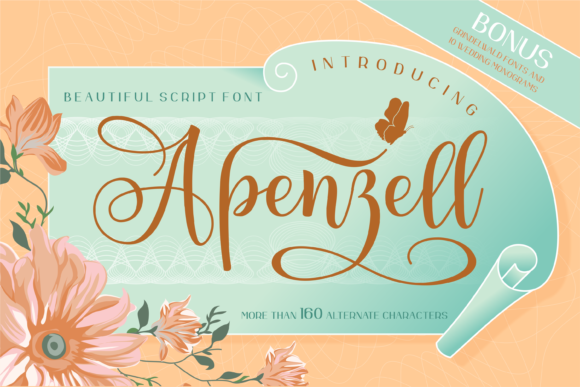
Apenzell: A Script Handwritten Font for Timeless Branding and Elegant Design Projects
It was early Monday morning and I was staring at a blank brand board for a new client — a small artisanal coffee shop looking to rebrand with warmth, personality, and a touch of nostalgia. The brief mentioned a desire for a "handwritten feel" that still felt polished and professional. I’d been meaning to test Apenzell, a script handwritten font I’d seen floating around design forums. Something about its flowing strokes and elegant baseline made me curious. I dropped it into the logo mockup first — just the shop’s name in a simple layout — and immediately felt a shift in the tone of the design. It wasn’t just legible; it was expressive.
Apenzell for Wedding Invitations and Elegant Branding
I’ve used plenty of script fonts for wedding stationery before, but Apenzell stood out for its balance between formality and approachability. When I tested it on a sample invitation suite, the letterforms felt like a personal signature rather than a generic font. The soft curves and natural rhythm gave the design a handwritten warmth, while the consistent baseline and spacing kept it from looking too casual. It worked beautifully on both digital and printed formats — from save-the-dates to thank you cards. The font’s elegance made it perfect for upscale events and boutique brands that want to communicate sophistication without feeling stiff.
How Apenzell Elevates Logo Design and Business Cards
Back to the coffee shop project — after seeing how Apenzell worked on the logo mockup, I decided to test it across the rest of the brand materials. I used it for the business card design, pairing it with a clean sans serif for the secondary text. The contrast was subtle but effective: the handwritten font brought personality and warmth, while the sans serif grounded the design with clarity and structure. The result? A business card that felt personal yet professional — exactly what the client was aiming for. Apenzell performed especially well in logo lockups where the brand name needed to stand out as a statement piece rather than just functional text.
Using Apenzell in Packaging Design and Product Labels
When the client asked about packaging — specifically coffee bags and small stickers for their merchandise — I was initially hesitant to use a script font. But Apenzell surprised me. At a slightly larger size, the font remained highly legible and added a charming, artisanal feel to the product labels. I made sure to test it in different weights and spacing options to ensure it didn’t get lost in the background or feel too busy. The result was a cohesive packaging system that felt handcrafted and thoughtful. The font’s personality helped the brand stand out on shelves without sacrificing readability or brand consistency.
Apenzell for Quotes and Social Media Graphics
One of the client’s marketing goals was to build a strong presence on Instagram and Pinterest. That meant creating quote-based graphics, product showcases, and behind-the-scenes visuals that felt cohesive and visually appealing. I used Apenzell for short-form text overlays — like taglines and featured quotes — and found that it added a soft, inviting tone to the visuals. The font’s organic flow worked especially well with lifestyle photography and warm color palettes. I paired it with a clean display font for headers and a minimalist sans serif for captions, creating a layered but harmonious typographic system.
Testing Apenzell Across Web and Print Materials
As I moved into the final stages of the project, I wanted to ensure Apenzell held up across both digital and print assets. I tested it in a variety of contexts: website headers, email newsletters, printed menus, and even signage mockups. At smaller sizes, it was best used sparingly — as a headline or accent font — but at larger sizes, it truly shined. The font’s natural rhythm and elegant structure made it ideal for hero sections on the homepage and printed posters for in-store promotions. I also checked the font files to make sure it included the necessary web and desktop formats, and I was pleased to find that it supported multilingual characters and came with commercial licensing — a must for client work.
Font Pairing Tips with Apenzell
One of the most important lessons I’ve learned as a designer is that no font exists in a vacuum. Apenzell is best when paired with typefaces that balance its expressive nature. For the coffee shop project, I paired it with a soft serif for subheadings and a clean sans serif for body copy. This created a visual hierarchy that guided the eye without overwhelming the design. If you're using Apenzell for a logo or a headline, consider pairing it with a modern sans serif to keep the overall look fresh and contemporary. For more traditional or vintage-inspired branding, a serif font with a bit of character complements Apenzell beautifully.
Why Apenzell Works Best as a Display or Accent Font
While Apenzell is technically a script handwritten font, I found it most effective when used as a display or accent font rather than for long blocks of text. Its personality shines in headlines, logos, and quotes — places where you want to evoke emotion and add a human touch. I wouldn’t recommend using it for body copy or extended reading, as the fluid strokes can become visually tiring. But as a logo font, a packaging accent, or a social media header, it brings a unique charm that’s hard to replicate with more rigid typefaces.
What to Look for When Using Apenzell in Client Projects
If you're considering Apenzell for a client project, make sure to test it in multiple contexts before locking it into the brand system. Look at how it performs in print versus digital, how it pairs with other fonts, and how it reads at different sizes. Also, check for stylistic alternates, ligatures, and variations in weight — these can add depth and flexibility to your design. Most importantly, make sure the font aligns with the brand’s tone and audience. Apenzell is ideal for brands that want to feel personable, elegant, and creative — perfect for boutiques, wellness studios, artisanal shops, and independent creatives.