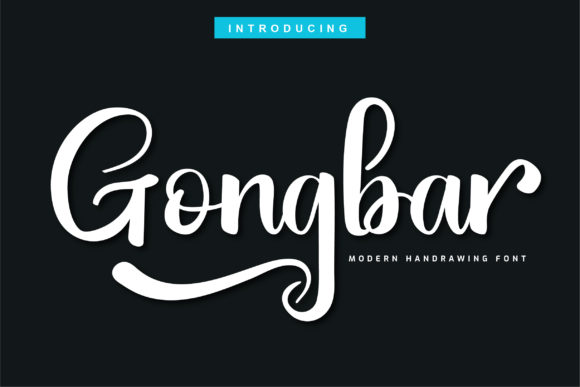
Gongbar: A Distinct Handwritten Font for Timeless Branding Projects
Gongbar in Action: Starting a Brand Identity from Scratch
It was a crisp Monday morning, and I was staring at a blank brand board for a new client — a small artisanal coffee shop tucked into a quiet corner of the city. The brief was clear: create a visual identity that feels warm, personal, and just a little whimsical. As I began sketching logo ideas, I remembered a font I’d recently downloaded — Gongbar, a script handwritten font that had caught my eye for its delicate strokes and timeless appeal. I dropped it into the first logo mockup and immediately felt the shift. The soft curves and flowing lines gave the brand a human touch, something that generic sans serifs just couldn’t replicate.
Gongbar for Wedding Invitations and Elegant Branding
Before this project, I mostly associated Script Handwritten fonts like Gongbar with wedding stationery or quote prints. But as I explored its character set more deeply, I realized how versatile it truly is. The font has a graceful rhythm that works beautifully in both formal and casual settings. For a recent wedding branding gig, I used Gongbar across save-the-dates, RSVP cards, and even digital banners. The result? A cohesive, romantic aesthetic that the couple absolutely loved. It’s not just a font for weddings — it’s a font that brings elegance to any brand that values authenticity and warmth.
Testing Gongbar Across Brand Touchpoints
Back to the coffee shop project. Once the logo direction was approved, I started integrating Gongbar into other brand materials. I used it on business cards, packaging labels, and social media headers. I was curious how its delicate strokes would hold up in smaller sizes and on textured paper. The good news? It maintained its character without sacrificing readability. Of course, I made sure to pair it with a clean sans serif for body copy — something like Montserrat or Lato — to keep the design balanced and functional.
Why Gongbar Works Well as a Logo Font and Display Typeface
One of the first things I noticed about Gongbar is that it shines brightest when used as a headline or logo font. Its script style makes it ideal for short-form text — brand names, taglines, product names, and quotes. It’s not meant for long paragraphs, and honestly, it shouldn’t be. What it does do is add personality and a handcrafted feel to any design. When I placed it on the café’s storefront mockup, it gave the space a welcoming, curated look. The same went for the packaging — Gongbar on a kraft paper bag with a minimalist layout felt instantly premium.
Pairing Gongbar with Other Fonts for Visual Harmony
Font pairing is always a critical step in brand identity work. With a Handwritten Font like Gongbar, it’s important to balance its expressive nature with something more neutral. I went with a warm serif for printed menus and a modern sans serif for digital assets. The contrast helped maintain visual hierarchy while keeping the overall identity cohesive. I also appreciated that Gongbar comes with a variety of ligatures and stylistic alternates, which allowed me to tweak the look depending on the application — from a more formal header to a playful Instagram caption.
Using Gongbar for Business Cards, Packaging, and Social Media
One of the most practical aspects of working with Gongbar was how well it translated across mediums. I used it on embossed business cards, sticker labels for coffee bags, and even in the hero section of the brand’s website. In each case, it brought a sense of warmth and craftsmanship. On Instagram, where visual consistency is key, using Gongbar in quote graphics and story highlights helped reinforce the brand’s tone. It’s also worth noting that the font includes multilingual support and comes in compatible file formats, making it a solid choice for both web and print use.
Final Impressions: A Font That Adds Character Without Overpowering
By the time the brand rollout was complete, I had a renewed appreciation for the role a single Font can play in shaping a brand’s personality. Gongbar wasn’t just a design choice — it became part of the brand’s story. It gave the coffee shop a sense of soul, a handwritten warmth that resonated with customers. I’ve since recommended it to other designers working on boutique brands, handmade shops, and lifestyle editorial projects. If you’re looking for a Script Handwritten font that’s both delicate and distinct, Gongbar is definitely worth testing in your next branding system.
How to Test Gongbar Before Full Brand Integration
Before committing to any font in a brand system, I always test it across key applications. With Gongbar, I started by creating a small mood board with different brand elements — logo variations, color swatches, texture samples, and sample layouts. I also printed out mock business cards and packaging labels to see how the font held up in real life. This helped me catch any legibility issues early on and ensured that the font would work well across both digital and physical assets. If you’re considering Gongbar for your next project, start small, test often, and let the font guide the tone of your design.