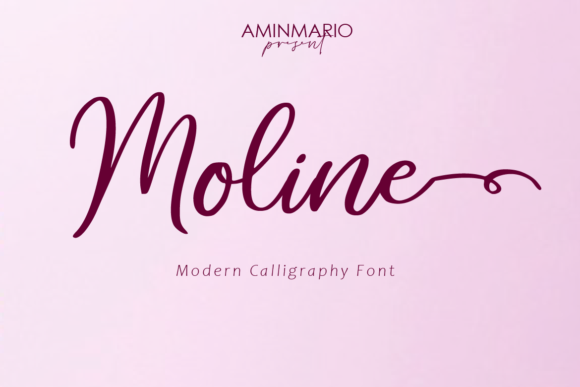
Moline: A Modern Calligraphy Font for Elegant Branding and Design
Moline for Wedding Invitations and Sophisticated Stationery
When I first opened a blank brand board for a local artisan stationery client, I knew I needed a script handwritten font that balanced elegance with modernity. Moline caught my eye immediately. As a modern calligraphy font, Moline carries a refined personality that feels both personal and professional. I tested it on a set of wedding invitation mockups, and the results were impressive. The font’s natural flow and slight bounce gave a sense of handwritten charm, while the clean lines kept it from feeling too ornate. It worked beautifully for both formal names and event details, especially in the italic style. For a script font, Moline maintains excellent legibility, even when scaled down for RSVP cards or envelope addressing.
Moline in Logo Design: A Balanced Display Font for Brand Identity
I brought Moline into a logo concept for a boutique skincare brand that wanted a clean, feminine aesthetic. Since Moline is a modern calligraphy font, it was perfect for the brand’s name, giving it a soft, approachable feel. I tested it against more traditional script fonts and found Moline held its own—it wasn’t too flashy like some decorative fonts, nor was it too plain like basic serif fonts. The italic version added a nice flourish without overpowering the design. I also appreciated the multilingual support, which became a bonus when the client mentioned expanding into French and Spanish markets later. Moline performed well as a headline font and logo typeface, especially when paired with a minimalist sans serif for subtext and taglines.
Moline for Packaging Design and Product Labels
One of the most practical applications I tested Moline on was a packaging mockup for a small-batch candle brand. I was curious how the font would hold up on physical product labels, especially when printed in different materials. The font’s clean strokes and moderate contrast made it surprisingly versatile. I used it for both the product name and short descriptions, and it looked elegant on matte and glossy finishes alike. That said, I wouldn’t recommend it for long-form body text on packaging—Moline is best used as a display font or accent font in these contexts. Still, for short phrases like “Handcrafted in Small Batches” or “Limited Edition,” it added a touch of warmth and authenticity that resonated with the brand’s story.
Moline on Websites and Social Media: Web Design and Digital Graphics
As a designer who often works across both print and digital, I wanted to see how Moline translated to web design and social media layouts. I embedded the font as a webfont on a client’s homepage hero section and used it in Instagram story templates for a local café rebrand. The font rendered well across devices, and the italic style added a dynamic feel to headlines without compromising readability. However, I noticed that using Moline for longer headlines or in lower resolutions could slightly reduce clarity. I found it most effective when used sparingly—on hero headers, quote graphics, or featured content blocks. Pairing it with a clean sans serif like Montserrat or Lato helped maintain visual hierarchy and balance across layouts.
When Moline Shines—and When to Pair It with Other Fonts
Moline is a modern calligraphy font that thrives in branding contexts where personality and elegance matter most. It’s not a one-size-fits-all solution, but rather a thoughtful choice for specific applications. I found it worked best as a logo font, headline font, or accent typeface rather than a full-body text solution. For editorial design or long-form content, I’d suggest pairing it with a readable serif font or a structured sans serif font to create contrast and maintain readability. Font pairing with Moline is straightforward—its soft curves and organic rhythm make it a great companion to more rigid or geometric typefaces. Just be sure to test the combinations in real design mockups before finalizing client work.
Final Thoughts: A Premium Font Worth Testing for Brand Designers
If you're working on a creative font project that leans into elegance—whether it’s a bakery packaging system, a wedding design suite, or a boutique brand identity—Moline deserves a spot in your test phase. As a script handwritten font, it brings a modern twist to traditional calligraphy without losing its warmth. It supports multilingual characters, which is a big plus for global branding or multicultural design projects. And with both regular and italic styles included, you get enough flexibility for headers, quotes, and social media graphics. Just remember to check the commercial font licensing before using it in client deliverables, especially for merchandise, templates, or print-on-demand products. Overall, Moline is a strong addition to any modern typography system, especially when you want to blend sophistication with a personal touch.